'Train Five. Keep Five': Neurological Alliance calls on political parties to commit to protecting brain health before election
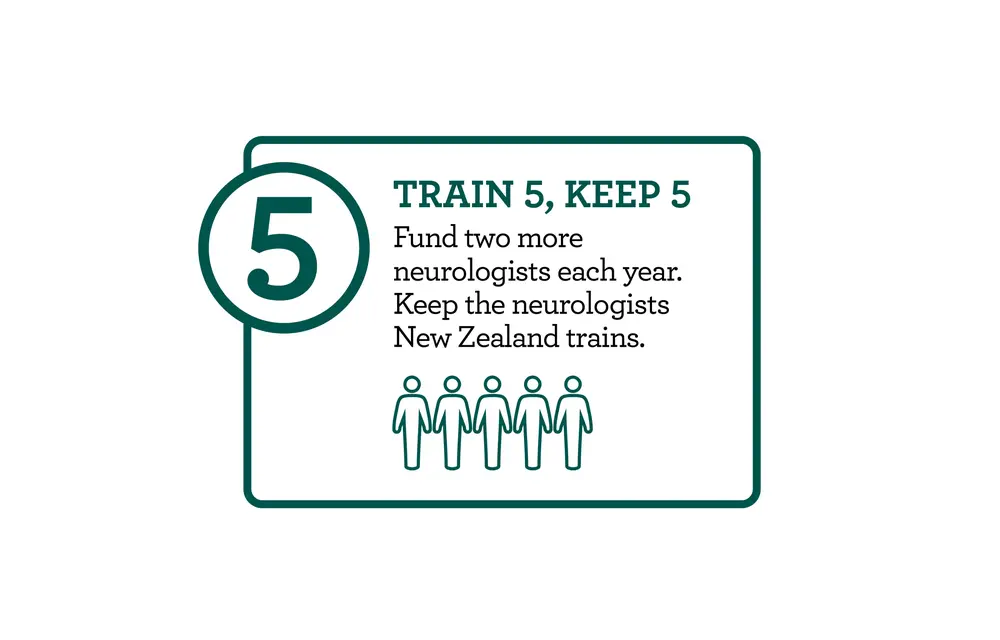
Twenty of New Zealand's leading brain health and neurological organisations are calling on political parties to commit to funding additional neurologists before November's General Election, warning the country is training specialists only to lose them because there are not enough funded hospital positions.
Neurological Alliance of New Zealand, representing 20 organisations including Stroke Aotearoa New Zealand, Dementia New Zealand, Alzheimer's New Zealand, Parkinson's New Zealand, Brain Injury New Zealand, the Neurological Foundation and others, has today written to all Members of Parliament urging support for its "Train Five. Keep Five." campaign.
The Alliance is calling for Government to, at a minimum, fund two additional public hospital neurology positions every year and commit to developing a national neurological workforce strategy to plan for the future.
Chair of Neurological Association of New Zealand Dr. James Cleland says the journey towards meeting future demand starts with a practical and achievable goal.
"New Zealand's ageing neurology workforce is not being replaced fast enough. Despite training around five neurologists annually, retirements limit workforce growth, and by 2035 the country is projected to remain around 50 percent short of the additional neurologists needed to meet demand. We need to act now to prevent this shortfall, and we can do this by creating more jobs for the neurologists we train so we can retain them to improve the neurologic health of New Zealanders."
The Alliance represents the interests of the estimated 1.5 million New Zealanders living with neurological conditions, with neurological disorders affecting one in three New Zealanders either directly or someone they love. Neurological conditions are also responsible for one in five deaths nationwide.
Chair of Neurological Alliance, Rich Easton, says the shortage of neurologists is already having significant consequences across the health system.
"Patients are waiting longer for specialist appointments, clinically appropriate referrals are being declined and people are being discharged back to their GP after just one consultation because there simply isn't capacity for the ongoing specialist care many neurological conditions require.
"Delays in diagnosis and treatment are placing increased pressure on emergency departments, primary care and the wider health system, ultimately costing New Zealand far more than the amount required to fund the additional roles each year."
Recent research led by Professor Anna Ranta, published in BMJ Neurology Open, found New Zealand has just one neurologist for every 74,604 adults, compared with one per 41,000 people in Australia and one per 14,000 across comparable high-income countries.
The research also revealed demand for neurological services already significantly exceeds supply and that, without intervention, the workforce shortage will continue to worsen over the next decade.
Stroke Aotearoa New Zealand Chief Executive Jo Lambert says the shortage is being felt every day by people recovering from stroke and other neurological conditions.
"Every year more than 9,000 New Zealanders experience a stroke, and timely access to specialist neurological diagnosis can make an enormous difference to recovery and long-term quality of life.
"We know earlier diagnosis and intervention lead to better outcomes, yet too many New Zealanders are waiting longer than they should or missing out altogether because there simply aren't enough neurologists."
Lambert says the campaign represents an opportunity for all political parties to make a tangible commitment to improving healthcare.
"This issue affects all of us – we all have loved ones needing specialist neurological care, or will have in the future. The solution is practical, affordable and based on retaining the specialists we're already investing in."
The Alliance is asking every political party to publicly commit before the election to:
- Funding two additional public hospital neurology positions every year, allowing New Zealand to "train five and keep five".
- Developing a national neurological workforce strategy to prepare for future demand, recruitment, retention, regional access and ongoing specialist care.
The Alliance has invited all political parties to commit publicly ahead of the election and meet to discuss how these commitments can improve outcomes for Kiwis affected by neurological conditions.
For more information, visit neurologicalalliance.org.nz.